Independent review
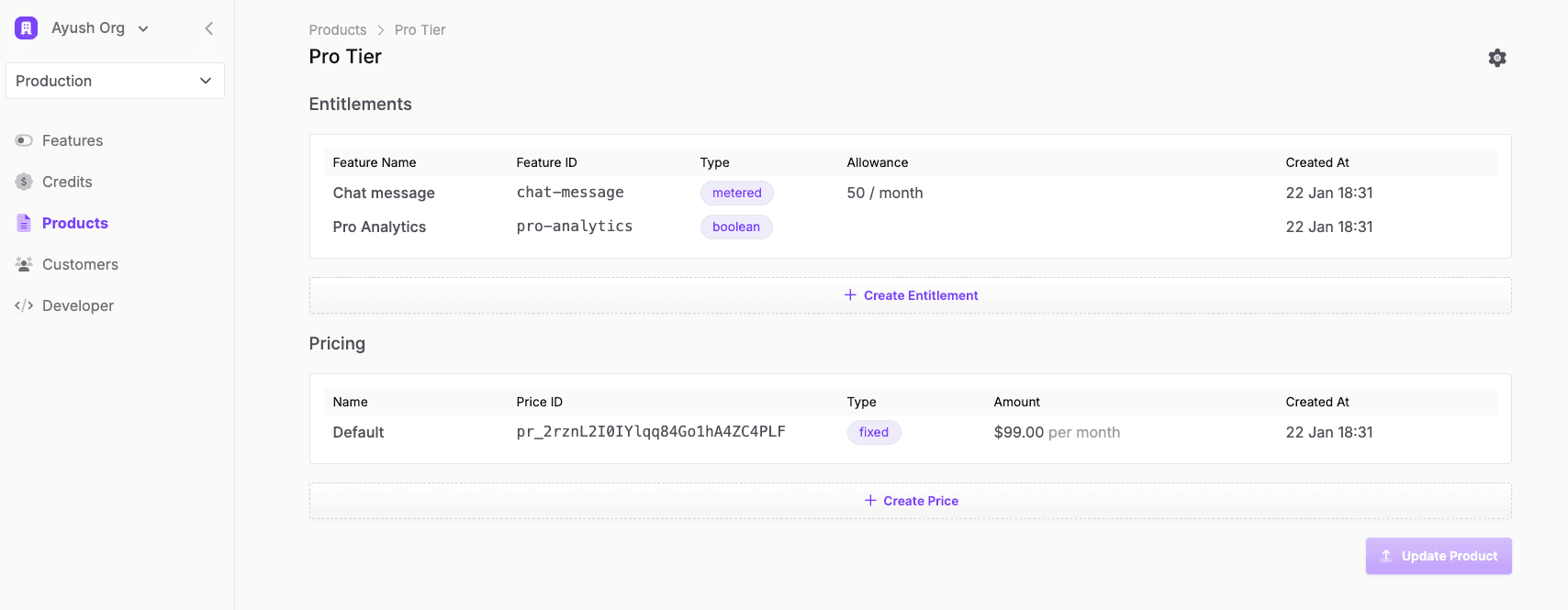
Assessment — Autumn targets the application logic that grows around Stripe rather than replacing payment processing. It models plans, feature access, metered usage, credits, grants, upgrades, cancellations, schedules, and customer-specific arrangements, then gives an application a small set of calls for attach, check, and track. For an AI or SaaS product already committed to Stripe, that can remove a large amount of custom entitlement and billing glue.
The hosted route is the easiest way to evaluate the model: connect Stripe, define products, integrate an SDK or API, and follow the production checklist for keys, webhooks, and promotion. Full self-hosting is a different proposition. The checked development material coordinates Bun services with PostgreSQL, Redis Stack or Dragonfly, ClickHouse, Java tooling, ElasticMQ, workers, and optional integrations. A Dockerfile packages the application processes, but it does not erase the stateful dependencies around them.
Setup difficulty — easy to moderate for a hosted proof of concept and advanced for self-hosting. Billing correctness deserves more attention than the number of install commands. Teams should integration-test proration, schedules, backdating, usage windows, webhook retries, Stripe reconciliation, and outage behavior against their own products. The official deployment guide says several reads and usage calls fail open with permissive responses during an outage while attach-like writes fail, prioritizing application availability at the cost of possible temporary unmetered access.
The practical fit is strongest for technical SaaS teams that want flexible Stripe-backed monetization and are comfortable making Autumn part of a revenue-critical path. It is weaker for teams avoiding Stripe, needing a small single-process service, or unwilling to operate queues, caches, analytics storage, and reconciliation. Stripe Billing, Orb, and Metronome overlap commercially, but comparison should include operating cost, data access, pricing-model coverage, and failure semantics rather than assuming exact parity.
GitHub reports the dev branch active, enabled, and not archived, with a July 2026 reviewed HEAD and no formal GitHub releases listed. The root is Apache-2.0, while at least one independently published package declares MIT, so the relevant artifact's own license should be checked. Recent fixes in billing preview behavior are healthy evidence of maintenance and also a reminder that subscription edge cases require pinned upgrades and regression tests.
Practical fit
Best for Stripe-based SaaS teams that value a unified pricing and entitlement model and can test billing edge cases; self-hosters need capacity for several stateful services.
Useful for
Stripe-backed subscriptions, trials, upgrades, and cancellation workflows Feature entitlements, usage metering, credits, grants, and spend controls Custom SaaS and AI pricing models managed through APIs, SDKs, and CLI
Dependencies
Bun 1.3.10 workspace PostgreSQL 18 with pg_trgm Redis Stack or Dragonfly ClickHouse, Java runtime, and queue-compatible infrastructure in the represented full stack
External services
Stripe is required for production payment and billing processing Optional Google OAuth, Supabase storage, Resend, Axiom, Svix, and Anthropic integrations
Deployment notes
For hosted use, connect a live Stripe account, promote reviewed plan configuration, rotate to production keys, configure webhooks, and test the documented fail-open path. For self-hosting, inventory PostgreSQL, cache, ClickHouse, queue, worker, storage, and observability dependencies and build a reconciliation runbook.
Limitations
Autumn remains coupled to Stripe for payment processing. Documented fail-open reads can permit temporary unmetered access during an outage. Full self-hosting has a broad stateful and asynchronous service footprint. The local bootstrap documents gaps around receipt expiry, logo storage, and Stripe webhook forwarding.
Project media